Eight Yoga Postures in the Dharmaputrikā
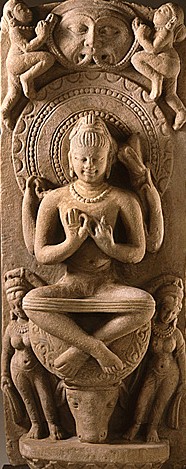
*It’s an exciting time for academic research on yoga, with pioneering **research projects like the Haṭha Yoga Project, or the American Academy of Religion’s Yoga in Theory and Practice, and many *individual** projects* **driving our understanding of the history of yoga forward. The AyurYog project’s research on yoga is focussed on the connections between yoga and the Indian medical and alchemical traditions, and our findings include the wider contexts of the textual materials we **examine. In her research on yoga literature, AyurYog researcher Christèle Barois has discovered a little-**known text that is key to understanding connections between yoga practice and medicine, but also gives new insights into the development of yogic postural practice: The Dharmaputrikā. *
The Dharmaputrikā, *which belongs to the so-called Śivadharma corpus, is a systematic teaching on a yoga aiming at liberation (mokṣa), the acquisition of supernatural powers (guṇaiśvarya), and the ability to change the body (parapurañjaya). It comprises about 350 *ślokas and was composed in the 10th century at the latest (an 11th century manuscript is preserved in Calcutta). The text has a number of special features that make it important for the history of yoga, such as its detailed explanations of internal breathing processes, and in particular, its unique exposition on the integration of medical practices into the course of a yogic process.
The second chapter of the* Dharmaputrikā, entitled *āsanaprakaraṇam, *describes eight yoga postures (āsana): the lotus-posture (padmāsanam), the *svastika-posture (svastikāsanam), the throne-posture (pīṭhāsanam), the mound-posture (sthalāsanam), the joined-hands-posture (añjalikāsanam), the half-moon-posture (ardhacandrāsanam), the staff-posture (daṇḍāsanam) and the all-auspicious-posture (sarvatobhadrāsanam). This chapter is an ancient and unparalleled testimony of a systematic and detailed description of a closed group of yogic postures, preceding by at least two centuries the description of postures in the Yogaśāstra by Hemacandra (12th century). Below is a first translation of this chapter by Christèle Barois.
Dharmaputrikā,** chapter 2: **āsanaprakaraṇam
| aṣṭabhiḥ sādhanair ebhiś cittaṃ kāyaṃ ca yatnataḥ |
| śodhayitvā tato yogī yogābhyāsaṃ samācaret | 1 |
| iṣṭadevaṃ namaskṛtyopādhyāyaṃ caiva yatnataḥ |
| ātiṣṭhet prāṅmukho bhūtvā śucir yogī viśeṣataḥ | 2 |
| padmasvastikapīṭhāni sthalam añjalikāsanam |
| ardhacandrañ ca daṇḍañ ca sarvatobhadram eva ca | 3 |
| evaṃ nāmabhir aṣṭābhir āsanaprakaraṇaṃ smṛtam |
| teṣāṃ saṃsthānabhedan tu pravakṣyāmi yathākramam | 4 |
After purifying the mind and the body diligently by the eight means [that have just been mentioned], the yogin then undertakes the repeated practice which aims at yoga. (1) Having paid homage to [his] chosen deity and to [his] preceptor carefully, facing East, the yogin, after he has become pure, should assume [the following postures] in particular: (2) The lotus, the svastika, the throne, the mound, the joined-hands-posture, and the half-moon, the staff and the all-auspicious. (3) Thus, the subject relating to the postures is taught through [these] eight names; I will explain their different forms, in due succession. (4)
The lotus-posture (padmāsanam)
| āsthityottānapādāgrau granthivac cetaretarau |
| ūrvor upari vinyasya śliṣṭapārṣṇī susaṃsthitau | 5 |
| uttānaṃ vāmahastāgraṃ pārṣṇyor upari vinyaset |
| tasyopari punas tadvat sthāpya dakṣiṇapallavam | 6 |
| avakrastabdhanisyandaṃ gātraśailāvalambitam |
| bāhuyugmaṃ tathā kāryaṃ yathā mṛdulatādvayam | 7 |
| samudbhavad athoṣṭhābhyām agāḍhapihitaṃ mukham |
| dantāgre nyasya jihvāgraṃ sthiraṃ grīvā ca mastakam | 8 |
| nāsāgramātradṛṣṭyardhanimīlallocanadvayam |
| padmāsanam iti jñeyaṃ praśastaṃ sarvayogibhiḥ | 9 |
Having maintained the two points of the upturned feet one over the other like a knot, having placed both heels tightly joined together on the two thighs, (5) [the yogin] must place the upturned fingers of the left hand on the two heels, [and] having placed again the fingers of the right [hand] on the [fingers of the left hand] in the same way, (6) the two arms should be shaped like two delicate creepers hanging from the stone-like body, flowing straight and immovable, (7) then, the mouth slightly closed, standing out due to the two lips, having placed the tip of the tongue on the tip of the teeth, neck and head being firm, (8) with the two eyes half-closed, the gaze [fixed] only on the tip of the nose, [this is] known as the posture [named] padma, praised by all yogins. (9)
The **svastika** posture (svastikāsanam)
| sthātavyau bhūtale pādāv āsanasthena yoginā |
| dakṣiṇaṃ vāmabhāge tu vāmapādan tu dakṣiṇe | 10 |
| anyonyābhimukhaṃ kṛtvā mṛgaśīrṣakaradvayam |
| pūrvoktenaiva gātreṇa svastikāsanasaṃjñitam | 11 |
The yogin being seated, both feet should be placed on the ground, the right foot being on the left side, the left foot on the right [side], (10) having put both hands, one facing the other, in the mṛgaśīrṣa position, the [upper] body [positioned] as has been mentioned before, [this is] the posture called svastika. (11)
The throne-posture (pīṭhāsanam)
| āsanasthena pādau dvau nyasyetāṃ bhūtale samam |
| jānudvaye hastatalaṃ sthāpya pīṭhāsanaṃ bhavet | 12 |
[The yogin] being seated, both feet should be placed parallel on the ground after he has placed the palm of the hands on both knees, [this is] the posture [named] pīṭha. (12)
The mound-posture (sthalāsanam)
| evam evāsanābhāve bhuvi sthitvā prayatnataḥ |
| bāhūrujaṅghāsuśliṣṭaṃ sthalāsanam udīritam | 13 |
Without being seated, standing similarly on the ground with special effort, arms, thighs, [and] shanks firmly tightened, [this is] the posture called sthala. (13)
The joined-hands-posture (añjalikāsanam)
| bhuvi sthitvā tu jānubhyāṃ stabdhagātreṇa yoginā |
| hṛdi hastapuṭaṃ kāryaṃ jñeyam añjalikāsanam | 14 |
Standing on the knees resting on the ground, the yogin whose body is immovable must form on the heart a hollow with the hands, [this] posture is known as añjalika. (14)
The half-moon-posture (ardhacandrāsanam)
| talapādena vāmena jānunā dakṣiṇena ca |
| sthitvā hastapuṭaṃ kāryam ardhacandrāsanaṃ viduḥ | 15 |
Standing on the left foot and on the right knee, [the yogin] must form [on the heart] a hollow with the hands, they know [this] posture as ardhacandra. (15)
The staff-posture (daṇḍāsanam)
| agre prasāritau pādau suśliṣṭau bhūmisaṃsthitau |
| upaveśyārdhakāyaṃ tu daṇḍāsanam iti smṛtam | 16 |
Both feet stretched ahead, firmly joined, placed on the ground, after having sat the [lower] half of the body, this is the posture called daṇḍa. (16)
The all-auspicious-posture (sarvatobhadrāsanam)
| samapādalabdhabhūmir adhijānukarānvitam |
| sambaddham asambaddhaṃ vā sarvatobhadram āsanaṃ | 17 |
The hands [placed] between the knees [in such a way that] they reach the ground at the same level as the feet, [the position] being tied or untied, is the *sarvatobhadra *posture. (17)
| iti dharmaputrikāyāṃ saṃhitāyāṃ āsanaprakaraṇaṃ nāma dvitīyaḥ paṭalaḥ |
Translation by Christèle Barois. The Sanskrit text given here is based on the Wellcome Library’s apograph of a Nepalese manuscript of the 12th century, and on the edition of the text in Kathmandu in 1998. The draft of the critical edition of the Dharmaputrikā, by Nirajan Kafle and Anil Kumar Acharya, has also been consulted. A collective reading with the Haṭha Yoga Project’s researchers Jason Birch, James Mallinson, and Mark Singleton and with Nirajan Kafle, has greatly contributed to clarifying some passages. This text has benefited from a final reading with T. Ganesan, Director of the Department of Indology, at the French Institute of Pondicherry. I also address my heartful thanks to Dagmar Wujastyk for her several valuable suggestions. An article that will give the critical apparatus of the Sanskrit text is forthcoming.